
Lubaantun & Nim Li Punit Ruins — Mayan Ruins Toledo Belize
Table of Contents
Most travelers visiting Belize head straight for the cayes and never make it south. Which means the two most impressive Mayan ruins in the entire country — Lubaantun and Nim Li Punit — sit almost entirely undisturbed in Toledo District, waiting for the small number of people who actually bother to look for them. If you’re staying at Tanager Rainforest Lodge, you’re already 10 minutes from one and 20 minutes from the other. There are days when you’ll be the only person there.
Two Mayan Ruins in Toledo Belize — Both Within 20 Minutes
Toledo District doesn’t advertise itself well. There are no billboards for these sites, no tour buses pulling up at 9am, no gift shops outside the gate. What there is: two of the most significant Mayan ceremonial centers in Belize, remarkably well-preserved, set in forested hillsides above the villages of the deep south.
Lubaantun is 10 minutes from the lodge by road. Nim Li Punit is 20 minutes. For detailed travel directions, see our location getting here page. On a single day, with an early start, you can visit both and still be back at the lodge for a late lunch. Steve Choco, our resident naturalist guide, knows both sites well — not just the archaeology, but the cultural context, the community history, and the stories that don’t make it onto the information boards.
"Most guests tell us the ruins are one of the biggest surprises of their trip. They expected rainforest and birding. They didn't expect to have an ancient Mayan site to themselves."
Lubaantun Ruins Belize — The Site Almost Nobody Knows
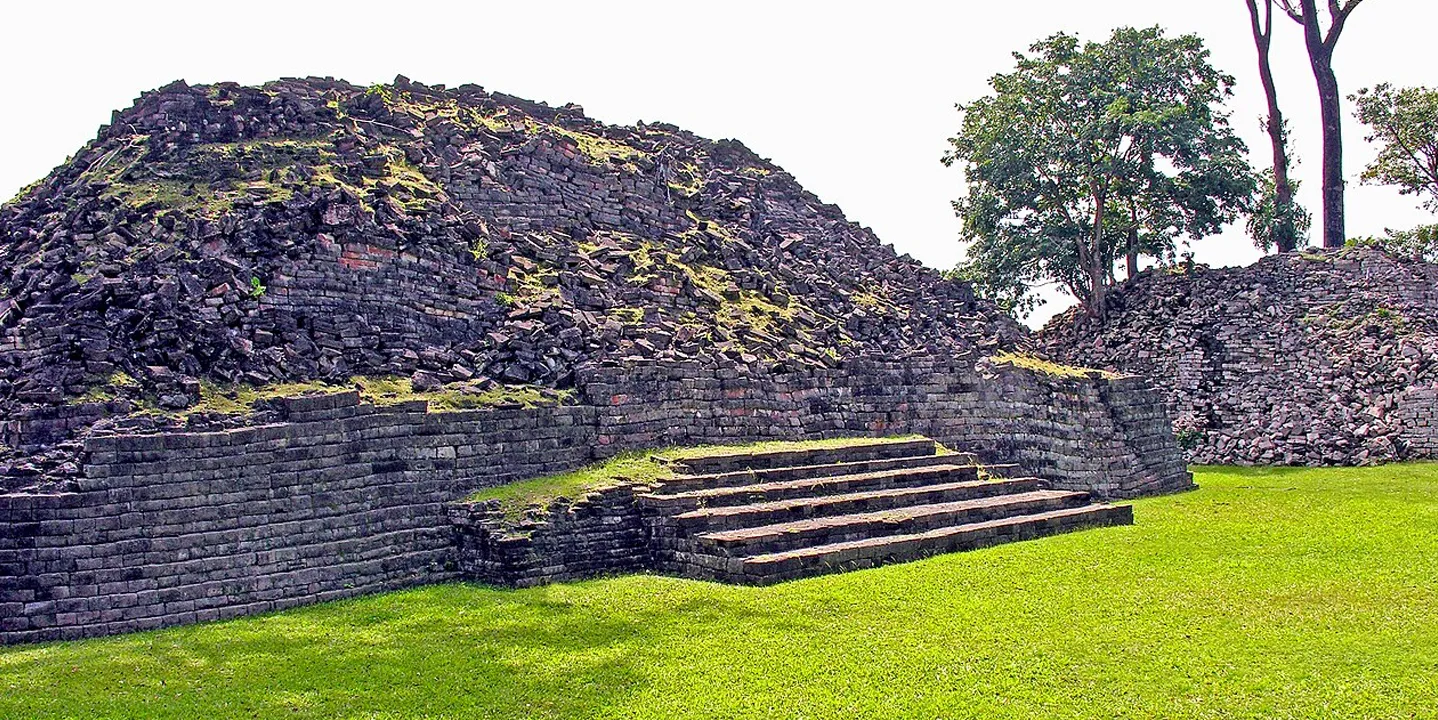
Lubaantun means ‘Place of the Fallen Stones’ in Yucatec Maya, and the name fits. The site was a major Late Classic ceremonial center, active between approximately 700 and 900 AD, and at its height it was one of the most important political centers in southern Belize. Then it was abandoned, the forest grew over it, and it was essentially unknown to the outside world until the early 20th century.
What makes Lubaantun architecturally unusual — even among Mayan sites — is the construction method. The buildings here were assembled without mortar. The stones were cut and fitted together with extraordinary precision, stacked without any binding material, and they’ve held their shape for over a thousand years. Archaeologists still debate exactly how this was achieved at this scale.
The site covers several acres of plazas, platforms, and ball courts set on a series of natural ridges. The setting is genuinely beautiful — the forest presses right up to the edge of the cleared area, and you can hear the birds from the ruins. On a quiet morning, with no other visitors around, it has a stillness that’s hard to describe.
What to Expect at Lubaantun
- The site is managed by the Institute of Archaeology of Belize. There’s a small on-site museum with artifacts and context.
- The main structures include several large platform pyramids and a series of connected plazas — enough to spend a genuine 2–3 hours exploring.
- The forest edge means excellent birding before and after the ruins visit — ask about combining this with our dedicated birding tours.
- You’re often the only visitors. On busy days — which is rare — you might share the site with one or two other groups.
- Wear sturdy footwear. Some areas involve uneven ground and stone surfaces.
- Bring water. There’s no café or refreshment stand on site.
The Crystal Skull of Lubaantun
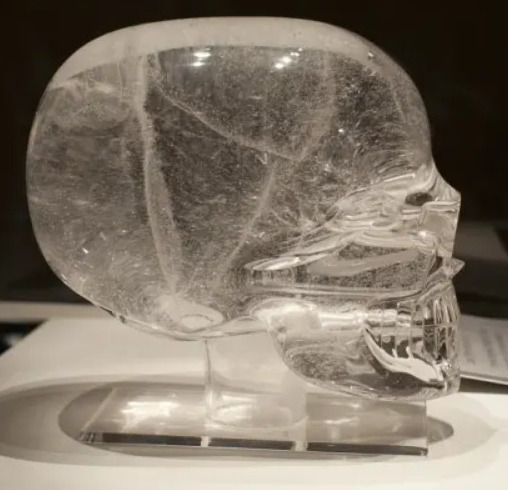
Lubaantun became briefly famous in the 1920s when a crystal skull was reportedly discovered there by Anna Mitchell-Hedges, daughter of British explorer F.A. Mitchell-Hedges. The skull — now known as the Mitchell-Hedges skull — became one of the most debated artifacts in 20th century archaeology, inspiring books, documentaries, and eventually an Indiana Jones film.
The scientific consensus today is that the skull was likely carved in the 19th century, not by the ancient Maya. But the story is part of the site’s history, and it’s worth knowing before you visit. Steve is happy to walk through the whole saga — and the actual archaeological significance of Lubaantun, which is considerable even without the mystique.
Nim Li Punit Ruins — The Jade and the Stelae
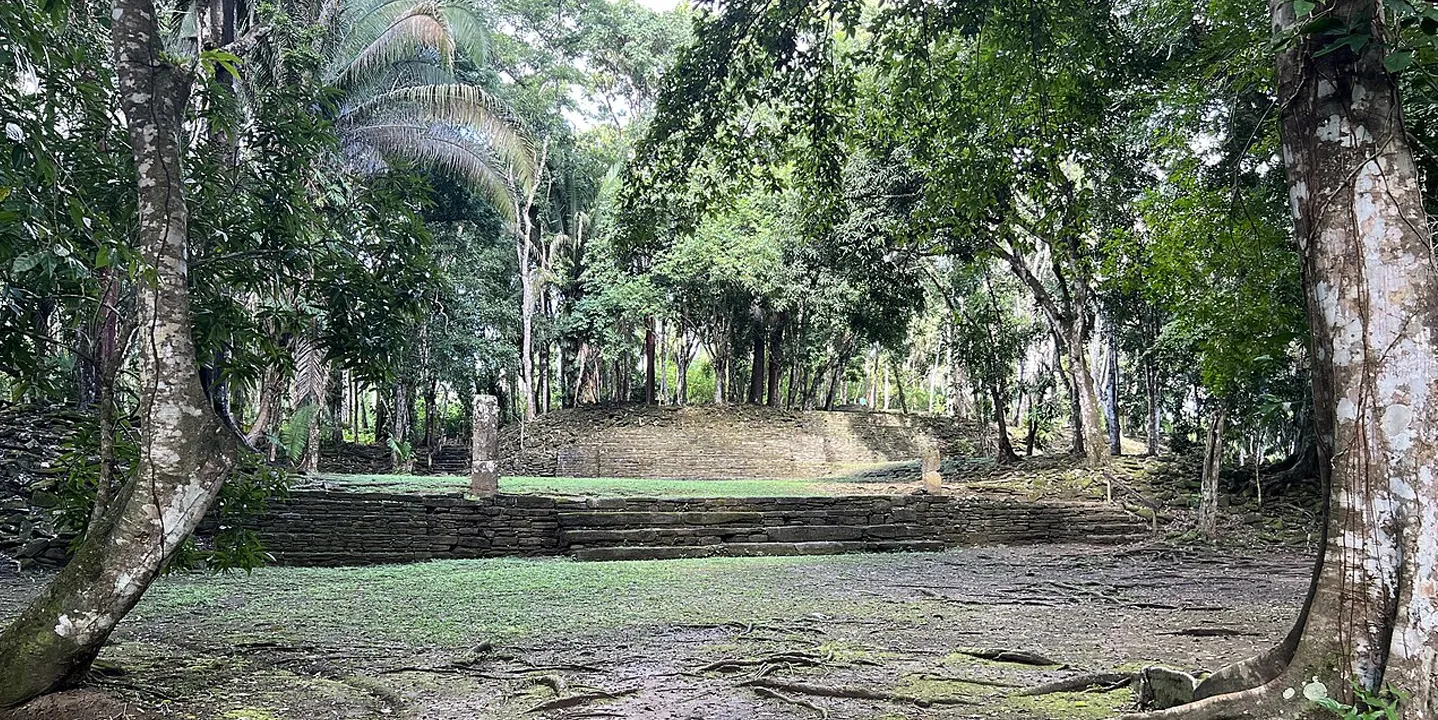
Nim Li Punit means ‘Big Hat’ in Q’eqchi’ Maya — a reference to the elaborate headdress worn by a figure on one of its carved stone monuments. The site is smaller than Lubaantun but, for a certain kind of traveler, more immediately striking. This is where the stelae are.
Nim Li Punit contains 26 carved stelae — upright stone monuments carved with images of rulers, ceremonial scenes, and hieroglyphic texts. Several are exceptionally well-preserved. The tallest standing stela at the site is one of the tallest in the entire Maya world. Walking among them feels different from standing in front of a platform pyramid — there’s a human scale to carved monuments that architecture doesn’t always have.
The site also produced one of the finest pieces of Mayan jade ever found anywhere: a carved jade pectoral (a chest ornament) depicting a young maize god. It was discovered in an unlooted royal tomb in 1986 and is now considered one of the most important Mayan artifacts in Belize.
What to Expect at Nim Li Punit
- The site is also managed by the Institute of Archaeology and has a small but excellent on-site museum displaying the jade pectoral and other finds.
- The stelae are the main draw — many are protected under cottages shelters to preserve them, which also makes them easier to photograph.
- The site sits on a hillside above a Q’eqchi’ Maya village. The approach road passes through working agricultural land and gives you a real sense of the living community around the ruins.
- Visit time: plan 1.5–2 hours to do it properly.
- Nim Li Punit is often combined with a stop in a nearby village for a meal or a visit to a cacao farm, making a full and genuinely varied day.
The Jade Pectoral
Found in 1986 during excavations of an unlooted royal tomb, the Nim Li Punit jade pectoral is a carved piece of blue-green jade depicting a young maize god — a central figure in Mayan cosmology representing life, renewal, and agricultural abundance. The carving is extraordinarily detailed and remarkably well-preserved.
The original is now in the Belize Museum in Belize City. A high-quality replica is displayed at the on-site museum at Nim Li Punit. It’s worth spending time with — this is the kind of object that makes you recalibrate what ‘ancient’ actually means.
Why Stay at Tanager Lodge
There are no hotels near either site. The closest accommodation in the area — other than Tanager — involves a significant drive from Punta Gorda, and most visitors to the ruins come as a day trip from town.
Staying at the lodge changes the experience entirely. You wake up in the rainforest in one of our hardwood cabanas, do an early morning bird walk if you want, have breakfast, and drive to the ruins before any day-trippers arrive. You get the sites in the quiet of the morning, before the heat. And you come back to the lodge for lunch, a swim in the pool, and an afternoon that’s yours to fill however you want.
Steve has guided guests at both sites for years. He’s not an archaeologist, but he’s read the literature, talked to the researchers who’ve worked at the sites, and — more importantly — he knows the living Q’eqchi’ and Mopan Maya communities around the ruins. Mayan sites are a core part of our broader cultural experiences in Toledo District.
"We don't oversell the ruins. They're not Chichen Itza. But for travelers who want something real and unhurried — a place where you can stand inside a Mayan ceremonial plaza without a crowd around you — Toledo is extraordinary."